Acts 15:7-21
After much discussion, Peter got up and addressed them: "Brothers, you know that some time ago God made a choice among you that the Gentiles might hear from my lips the message of the gospel and believe. 8 God, who knows the heart, showed that he accepted them by giving the Holy Spirit to them, just as he did to us. 9 He made no distinction between us and them, for he purified their hearts by faith. 10 Now then, why do you try to test God by putting on the necks of the disciples a yoke that neither we nor our fathers have been able to bear? 11 No! We believe it is through the grace of our Lord Jesus that we are saved, just as they are."
12 The whole assembly became silent as they listened to Barnabas and Paul telling about the miraculous signs and wonders God had done among the Gentiles through them. 13 When they finished, James spoke up: "Brothers, listen to me. 14 Simon has described to us how God at first showed his concern by taking from the Gentiles a people for himself. 15 The words of the prophets are in agreement with this, as it is written:
16 "'After this I will return and rebuild David's fallen tent. Its ruins I will rebuild, and I will restore it, 17 that the remnant of men may seek the Lord, and all the Gentiles who bear my name, says the Lord, who does these things' 18 that have been known for ages.
19 "It is my judgment, therefore, that we should not make it difficult for the Gentiles who are turning to God. 20 Instead we should write to them, telling them to abstain from food polluted by idols, from sexual immorality, from the meat of strangled animals and from blood. 21 For Moses has been preached in every city from the earliest times and is read in the synagogues on every Sabbath."
So far, we have learned that some things are worth the conflict. We have learned that we should seek guidance from mature believers outside the situation. And we have learned that we should allow the voices of all our various parts speak.
In these verses we find the apostles and elders discussing all this. It says that there was much discussion. This shows that weighed the opinions expressed. They did not just jump to a conclusion and discuss how to enforce their view.
Interestingly, Peter speaks, but that is not at all the final word. At least three others are mentioned speaking after him. This points us to a collective leadership.
Peter, Paul and Barnabas all spoke from experience. They saw God give his Holy Spirit to Gentiles. They saw God perform miracles among the Gentiles. And then Peter matches their experience with God's word. So the decision is born out of both witnessing the leading of God and hearing the words of God.
They (thankfully) decided that circumcision and Moses were not necessary for Salvation. They decided that they should make it not difficult to turn to God.
However, they also keep in mind those who have already been steeped in Judaism, since they were everywhere (verse 21). They laid out four key abstentions to help foster peace between the newly converted Gentiles and those who were raised in Judaism. 1. Abstain from food polluted by idols, 2. Abstain from sexual immorality, 3. Abstain from the meat of strangled animals and 4. Abstain from blood.
The key lesson here is in how we will treat those who "lose" the conflict. It would have been easy to treat them poorly. They were wrong. They need to adjust their thinking. They had been legalistic Pharisees (quite literally). But it would have been sadly ironic to make a decision in favor of grace and then cram it mercilessly down people's throats. They did just the opposite. After making the decision based on the truth of grace, they set up regulations to help those who "lost" the argument through the transition. Brilliant!
Wednesday, August 23, 2006


Tuesday, August 22, 2006
Church in Conflict (part 2) Diversity as both the problem and solution
I realize this is overdue, and I apologize to you who have come and seen the same post for nearly two months. I have some other things to post, but I want to finish this series on conflict first.
Acts 15:3-6
The church sent them on their way, and as they traveled through Phoenicia and Samaria, they told how the Gentiles had been converted. This news made all the brothers very glad. 4 When they came to Jerusalem, they were welcomed by the church and the apostles and elders, to whom they reported everything God had done through them.
5 Then some of the believers who belonged to the party of the Pharisees stood up and said, "The Gentiles must be circumcised and required to obey the law of Moses."
6 The apostles and elders met to consider this question. 7 After much discussion, Peter got up and addressed them:
I’m big on diversity. I consider it one of the marks of church health. But the blessing of diverse perspectives is also a curse from time to time. This is important to understand, because that means that conflict is not necessarily a sign of sickness. It is a sign of diversity.
In these few verses you have the views of the Phoenician and Samarian Christians represented: they were glad. This is to be expected since they were in a very similar situation as the Gentiles. You also have the views of the Pharisee Christians*. They demand circumcision and submission to the Law. This is also expected as they would represent the most Jewish portion of the church. Seemingly everyone who would want input gets it. All sides get their say. The apostles and elders then discuss the arguments.
So, it was diversity that allowed for such conflict. You bring Samaritans and Pharisees and conflict will arise. But these followers learned that this is not something to be feared. After all, he brought together a Zealot and a tax collector to be among his twelve.
Instead of fearing it, they seemed to embrace it. The decision happened among the leadership, but not without hearing the various arguments first. Everyone got a voice.
The humility to listen is necessary for leading diverse people through conflict.
Acts 15:3-6
The church sent them on their way, and as they traveled through Phoenicia and Samaria, they told how the Gentiles had been converted. This news made all the brothers very glad. 4 When they came to Jerusalem, they were welcomed by the church and the apostles and elders, to whom they reported everything God had done through them.
5 Then some of the believers who belonged to the party of the Pharisees stood up and said, "The Gentiles must be circumcised and required to obey the law of Moses."
6 The apostles and elders met to consider this question. 7 After much discussion, Peter got up and addressed them:
I’m big on diversity. I consider it one of the marks of church health. But the blessing of diverse perspectives is also a curse from time to time. This is important to understand, because that means that conflict is not necessarily a sign of sickness. It is a sign of diversity.
In these few verses you have the views of the Phoenician and Samarian Christians represented: they were glad. This is to be expected since they were in a very similar situation as the Gentiles. You also have the views of the Pharisee Christians*. They demand circumcision and submission to the Law. This is also expected as they would represent the most Jewish portion of the church. Seemingly everyone who would want input gets it. All sides get their say. The apostles and elders then discuss the arguments.
So, it was diversity that allowed for such conflict. You bring Samaritans and Pharisees and conflict will arise. But these followers learned that this is not something to be feared. After all, he brought together a Zealot and a tax collector to be among his twelve.
Instead of fearing it, they seemed to embrace it. The decision happened among the leadership, but not without hearing the various arguments first. Everyone got a voice.
The humility to listen is necessary for leading diverse people through conflict.
Thursday, June 29, 2006
Conflict in the Church (part 1)
Acts 15:1-3:
Some men came down from Judea to Antioch and were teaching the brothers: "Unless you are circumcised, according to the custom taught by Moses, you cannot be saved." 2 This brought Paul and Barnabas into sharp dispute and debate with them. So Paul and Barnabas were appointed, along with some other believers, to go up to Jerusalem to see the apostles and elders about this question.
The Argument: You cannot accept Messiah without being Jewish. Circumcision has always been a part of proselization. Jesus is a supplement to Moses, and you cannot put the cart before the horse.
The Response: Completely unacceptable. The Law does not save. It did not save us Jews. It will not save the Gentiles.
The Resolution: Find a third party of believers. People who have known the truth of the gospel for a long time, who because of their tenure of faith and closeness with Jesus can speak with some authority here.
This was an important debate. I'm certainly glad that Paul and Barnabas did not simply agree to disagree. The history of Christianity was at stake and they could sense it.
I'm also grateful for the good sense of the people at Antioch to seek assistance from an outside church and from believers who had a more tenured perspective.
I pray that we could have the wisdom to sense which disputes were worth fighting and which were not, and that we could have the backbone to not back down even in the face of intimidating opposition (see Galatians 2:11-16 for more).
And I pray that we would have wisdom to know how to resolve issues. I pray that we would have the unity and humility to lean on others outside our circle. I pray that we would find creative and loving ways to maintain our unity in truth.
Some men came down from Judea to Antioch and were teaching the brothers: "Unless you are circumcised, according to the custom taught by Moses, you cannot be saved." 2 This brought Paul and Barnabas into sharp dispute and debate with them. So Paul and Barnabas were appointed, along with some other believers, to go up to Jerusalem to see the apostles and elders about this question.
The Argument: You cannot accept Messiah without being Jewish. Circumcision has always been a part of proselization. Jesus is a supplement to Moses, and you cannot put the cart before the horse.
The Response: Completely unacceptable. The Law does not save. It did not save us Jews. It will not save the Gentiles.
The Resolution: Find a third party of believers. People who have known the truth of the gospel for a long time, who because of their tenure of faith and closeness with Jesus can speak with some authority here.
This was an important debate. I'm certainly glad that Paul and Barnabas did not simply agree to disagree. The history of Christianity was at stake and they could sense it.
I'm also grateful for the good sense of the people at Antioch to seek assistance from an outside church and from believers who had a more tenured perspective.
I pray that we could have the wisdom to sense which disputes were worth fighting and which were not, and that we could have the backbone to not back down even in the face of intimidating opposition (see Galatians 2:11-16 for more).
And I pray that we would have wisdom to know how to resolve issues. I pray that we would have the unity and humility to lean on others outside our circle. I pray that we would find creative and loving ways to maintain our unity in truth.
Tuesday, June 06, 2006
Can't win them all
Acts 14 begins with Paul and Barnabbas in Iconium. But the resistance from the non-converts became so strong that PAul and Barnabbas had to flee. They go to Lystra. And Lystra is one of the strangest accounts in Acts to me.
While Paul is speaking, he heals a man. The people who saw this (presumably the same ones who heard Paul's message) conclude that Paul and Barnabbas must be Hermes and Zeus, respectively.
They get the priests and some bulls to start the sacrifice when Paul and Barnabbas tear their clothes. They said, "Men, why are you doing this? We too are only men, human like you. We are bringing you good news, telling you to turn from these worthless things to the living God, who made heaven and earth and sea and everything in them. In the past, he let all nations go their own way. Yet he has not left himself without testimony: He has shown kindness by giving you rain from heaven and crops in their seasons; he provides you with plenty of food and fills your hearts with joy." (Acts 14:15-17)
Here's my question: How did Paul's message get so misunderstood? What did he say that could have been construed such?
But even after, he sets them straight, they still "had difficulty keeping the crowd from sacrificing to them." Crazy!
Then the Jews who opposed him in Iconium and and Antioch (see chapter 13) came and won the crowd over. They began to stone them.
Paul barely escapes but moves quickly on to Derbe to preach there. He has great succes there. He then went back to Lystra, Iconium and Antioch, the three places where he had just faced so much opposition.
I guess you can't win them all. Not even Paul and Barnabbas did. This probably was frustrating for them (though it did not show), but I find it encouraging.
This is embarassing to admit, but when I came to ELCC, I was confident that we would be running huge numbers and having weekly baptisms in no time. Green behind my ears and naive arrogance in my eyes. I could not imagine that I would be so bad at some things. I could not imagine that I would encounter so many failures.
But He who called us is faithful, and everything he does is right. I'm glad Paul and Barnabbas did not give up in Antioch, Iconium or Lystra. And I'm gald that I have not given up either. Now, when a ministry effort turns into a disaster, I'll squint and say, "Hey, isn't that Derbe up ahead?"
While Paul is speaking, he heals a man. The people who saw this (presumably the same ones who heard Paul's message) conclude that Paul and Barnabbas must be Hermes and Zeus, respectively.
They get the priests and some bulls to start the sacrifice when Paul and Barnabbas tear their clothes. They said, "Men, why are you doing this? We too are only men, human like you. We are bringing you good news, telling you to turn from these worthless things to the living God, who made heaven and earth and sea and everything in them. In the past, he let all nations go their own way. Yet he has not left himself without testimony: He has shown kindness by giving you rain from heaven and crops in their seasons; he provides you with plenty of food and fills your hearts with joy." (Acts 14:15-17)
Here's my question: How did Paul's message get so misunderstood? What did he say that could have been construed such?
But even after, he sets them straight, they still "had difficulty keeping the crowd from sacrificing to them." Crazy!
Then the Jews who opposed him in Iconium and and Antioch (see chapter 13) came and won the crowd over. They began to stone them.
Paul barely escapes but moves quickly on to Derbe to preach there. He has great succes there. He then went back to Lystra, Iconium and Antioch, the three places where he had just faced so much opposition.
I guess you can't win them all. Not even Paul and Barnabbas did. This probably was frustrating for them (though it did not show), but I find it encouraging.
This is embarassing to admit, but when I came to ELCC, I was confident that we would be running huge numbers and having weekly baptisms in no time. Green behind my ears and naive arrogance in my eyes. I could not imagine that I would be so bad at some things. I could not imagine that I would encounter so many failures.
But He who called us is faithful, and everything he does is right. I'm glad Paul and Barnabbas did not give up in Antioch, Iconium or Lystra. And I'm gald that I have not given up either. Now, when a ministry effort turns into a disaster, I'll squint and say, "Hey, isn't that Derbe up ahead?"
Sunday, April 16, 2006
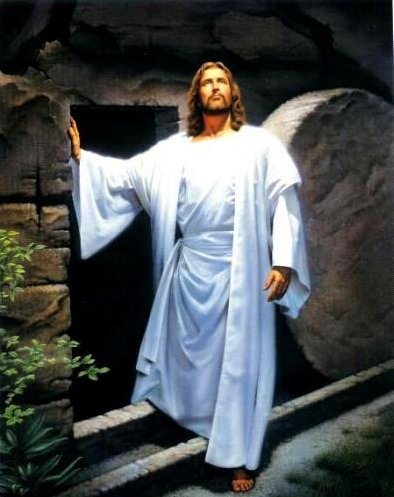
Dead Is Dead

Is there anything more final than death?
When you are dead, you are dead.
There is not one word after your final breath.
When you are dead, you are dead.
Death is eternal, an endless sleep.
When you are dead, you are done.
You are embalmed and buried six feet deep.
When you are dead you are done.
The grave’s grip will not grow tired.
When you are dead, you are dead.
There’s no rebirth of a life expired.
When you are dead you are dead.
For ages past this point was true;
‘When you are dead, you are done.’
Then Christ came and did something new.
Oh, He was dead, but he was not done.
Mary went to embalm him, because
When you are dead, you are dead.
But two angels there did give her pause:
‘Why look for the living among the dead?’
Through His death He conquered sin.
But though He was dead, He was not done
He conquered Death, He’s Alive Again!
He was dead, but He is the Living One.
So Death no longer holds the final say.
When you’re dead there is yet another song.
You will live again with Him someday.
Because, now, when you’re dead it’s not for long.
Thursday, February 02, 2006
En-Theus-iasm
Paul has just given a sermon, the main points of which were; Jesus is the Promised One, He was raised from the dead, and forgiveness is now available. Here is the reaction to that sermon:
Acts 13:42 As Paul and Barnabas were leaving the synagogue, the people invited them to speak further about these things on the next Sabbath. 43 When the congregation was dismissed, many of the Jews and devout converts to Judaism followed Paul and Barnabas, who talked with them and urged them to continue in the grace of God.
44 On the next Sabbath almost the whole city gathered to hear the word of the Lord. 45 When the Jews saw the crowds, they were filled with jealousy and talked abusively against what Paul was saying.
46 Then Paul and Barnabas answered them boldly: "We had to speak the word of God to you first. Since you reject it and do not consider yourselves worthy of eternal life, we now turn to the Gentiles. 47 For this is what the Lord has commanded us:
"'I have made you a light for the Gentiles,
that you may bring salvation to the ends of the earth.'"
48 When the Gentiles heard this, they were glad and honored the word of the Lord; a all who were appointed for eternal life believed.
49 The word of the Lord spread through the whole region. 50 But the Jews incited the God-fearing women of high standing and the leading men of the city. They stirred up persecution against Paul and Barnabas, and expelled them from their region. 51 So they shook the dust from their feet in protest against them and went to Iconium. 52 And the disciples were filled with joy and with the Holy Spirit.
en·thu·si·asm n.
1. Great excitement for or interest in a subject or cause.
2. A source or cause of great excitement or interest.
3. Archaic.
A. Ecstasy arising from supposed possession by a god.
B. Religious fanaticism.
[Late Latin enthsiasmus, from Greek enthousiasmos, from enthousiazein, to be inspired by a god, from entheos, possessed : en-, in; see en-2 + theos, god; see dhs- in Indo-European Roots.]
Word History: "Nothing great was ever achieved without enthusiasm,"” said the very quotable Ralph Waldo Emerson, who also said, "Everywhere the history of religion betrays a tendency to enthusiasm."” These two uses of the word enthusiasm, one positive and one negative both derive from its source in Greek. Enthusiasm first appeared in English in 1603 with the meaning Â"possession by a god." The source of the word is the Greek enthousiasmos, which ultimately comes from the adjective entheos, "“having the god within," formed from en, "“in, within,"” and theos, "god."” (dictionary.com)
The greatness at the beginning of the Acts Church Movement was not just having guys like Peter and Paul leading. I would argue the Holy Spirit played a much larger role than they did. But also we cannot ignore the response of the hearers. They showed an enthusiasm that proved explosive. From their insistence to hear more of what Paul and Barnabbas had to say, to their apparent commitment to continue in the grace of God, to their gladness, their eagerness to invite others (I assume that is how the crowds grew), to their honoring of God's word (let what that means sink in sink in), and their joy even after Paul and Barnabbas got run out of town (walk away from them?) can be attributed to what were told in verse 52. They were filled with joy and the Holy Spirit. God's Spirit in them. En Theos. Enthusiasm.
For us to capture the explosive power of the Church in those days, we need to find space for him within us. More than strategies, skills, money, or staffing, we need You, Lord. Maranatha! Come, Lord Jesus!
Acts 13:42 As Paul and Barnabas were leaving the synagogue, the people invited them to speak further about these things on the next Sabbath. 43 When the congregation was dismissed, many of the Jews and devout converts to Judaism followed Paul and Barnabas, who talked with them and urged them to continue in the grace of God.
44 On the next Sabbath almost the whole city gathered to hear the word of the Lord. 45 When the Jews saw the crowds, they were filled with jealousy and talked abusively against what Paul was saying.
46 Then Paul and Barnabas answered them boldly: "We had to speak the word of God to you first. Since you reject it and do not consider yourselves worthy of eternal life, we now turn to the Gentiles. 47 For this is what the Lord has commanded us:
"'I have made you a light for the Gentiles,
that you may bring salvation to the ends of the earth.'"
48 When the Gentiles heard this, they were glad and honored the word of the Lord; a all who were appointed for eternal life believed.
49 The word of the Lord spread through the whole region. 50 But the Jews incited the God-fearing women of high standing and the leading men of the city. They stirred up persecution against Paul and Barnabas, and expelled them from their region. 51 So they shook the dust from their feet in protest against them and went to Iconium. 52 And the disciples were filled with joy and with the Holy Spirit.
en·thu·si·asm n.
1. Great excitement for or interest in a subject or cause.
2. A source or cause of great excitement or interest.
3. Archaic.
A. Ecstasy arising from supposed possession by a god.
B. Religious fanaticism.
[Late Latin enthsiasmus, from Greek enthousiasmos, from enthousiazein, to be inspired by a god, from entheos, possessed : en-, in; see en-2 + theos, god; see dhs- in Indo-European Roots.]
Word History: "Nothing great was ever achieved without enthusiasm,"” said the very quotable Ralph Waldo Emerson, who also said, "Everywhere the history of religion betrays a tendency to enthusiasm."” These two uses of the word enthusiasm, one positive and one negative both derive from its source in Greek. Enthusiasm first appeared in English in 1603 with the meaning Â"possession by a god." The source of the word is the Greek enthousiasmos, which ultimately comes from the adjective entheos, "“having the god within," formed from en, "“in, within,"” and theos, "god."” (dictionary.com)
The greatness at the beginning of the Acts Church Movement was not just having guys like Peter and Paul leading. I would argue the Holy Spirit played a much larger role than they did. But also we cannot ignore the response of the hearers. They showed an enthusiasm that proved explosive. From their insistence to hear more of what Paul and Barnabbas had to say, to their apparent commitment to continue in the grace of God, to their gladness, their eagerness to invite others (I assume that is how the crowds grew), to their honoring of God's word (let what that means sink in sink in), and their joy even after Paul and Barnabbas got run out of town (walk away from them?) can be attributed to what were told in verse 52. They were filled with joy and the Holy Spirit. God's Spirit in them. En Theos. Enthusiasm.
For us to capture the explosive power of the Church in those days, we need to find space for him within us. More than strategies, skills, money, or staffing, we need You, Lord. Maranatha! Come, Lord Jesus!
Tuesday, January 10, 2006
Sermon in Rhyme
What you will find below is a poorly written retelling of Paul's Acts 13 sermon in rhyme. I did it to force me to think through what was said. I found the exercise both difficult and helpful:
Jacob's sons, hear me and you who love YHWH
Listen to these words and hear what I say.
He chose Abraham's sons to be his faves,
Made them prosper even while Egypt's slaves.
He rescued them from Pharaoh's tight fist,
Restrained himself from destroying them in the wilderness.
He cleared out seven nations to give them space
In just the first 450 years, this all took place.
Then God gave them judges like Samuel to reign.
They wanted a king, he gave Saul the Insane.
He removed him and gave David the throne,
Who loved God's will more than his own.
And God has sent from David's royal line
The promised Savior, Jesus Divine.
Elijah has come, as Malachi foretold,
He was John the Baptist. His message, bold.
"Repent!" He cried preparing these places
Knowing he was not even fit to tie His laces.
We, lovers of YHWH are the ones entrusted with this Saving Word.
Jerusalem rejected him despite fulfilling of all they'd heard.
They pressured Pilot to declare death his doom.
Fulfilling prophecy, they carried his corpse from cross to tomb.
He spent much time with his followers, he, no longer dead.
Teaching them to tell Abe's sons all he'd done and said.
What he promised to the Fathers to their children has come true!
Good news, as it states back in Psalm 2:
"My Son" That's what Jesus by YHWH was called,
The unconquerable King on Zion Installed.*
He was raised eternal to the throne of David.
Messiah's body saved from the worms of the grave who crave it.
David, though faithful, died, his body buried and is now but bone,
But not Jesus, his body whole, sits on David's throne

And the Living One is now declared the Forgiving One.
Trusting Him produces a righteousness the Law couldn't have done.
Good News! But from the prophets take heed:
Though told, you dont believe I've done this wondrous deed.
You all scoff in pride. Where is your wonder?
The fool who misses Jesus will die in his blunder.
*I inserted some the ideas found in Psalm 2 that are not directly quoted, because I feel Paul was alluding to the whole thing.
Jacob's sons, hear me and you who love YHWH
Listen to these words and hear what I say.
He chose Abraham's sons to be his faves,
Made them prosper even while Egypt's slaves.
He rescued them from Pharaoh's tight fist,
Restrained himself from destroying them in the wilderness.
He cleared out seven nations to give them space
In just the first 450 years, this all took place.
Then God gave them judges like Samuel to reign.
They wanted a king, he gave Saul the Insane.
He removed him and gave David the throne,
Who loved God's will more than his own.
And God has sent from David's royal line
The promised Savior, Jesus Divine.
Elijah has come, as Malachi foretold,
He was John the Baptist. His message, bold.
"Repent!" He cried preparing these places
Knowing he was not even fit to tie His laces.
We, lovers of YHWH are the ones entrusted with this Saving Word.
Jerusalem rejected him despite fulfilling of all they'd heard.
They pressured Pilot to declare death his doom.
Fulfilling prophecy, they carried his corpse from cross to tomb.
He spent much time with his followers, he, no longer dead.
Teaching them to tell Abe's sons all he'd done and said.
What he promised to the Fathers to their children has come true!
Good news, as it states back in Psalm 2:
"My Son" That's what Jesus by YHWH was called,
The unconquerable King on Zion Installed.*
He was raised eternal to the throne of David.
Messiah's body saved from the worms of the grave who crave it.
David, though faithful, died, his body buried and is now but bone,
But not Jesus, his body whole, sits on David's throne
And the Living One is now declared the Forgiving One.
Trusting Him produces a righteousness the Law couldn't have done.
Good News! But from the prophets take heed:
Though told, you dont believe I've done this wondrous deed.
You all scoff in pride. Where is your wonder?
The fool who misses Jesus will die in his blunder.
*I inserted some the ideas found in Psalm 2 that are not directly quoted, because I feel Paul was alluding to the whole thing.
Thursday, January 05, 2006

Wednesday, December 14, 2005
The Literal Linus
 Last year I watched the Peanuts Christmas special for the first time since being a kid. I had little interest, but my daughter was finally old enough to care, so we watched it together. The show is about Charlie Brown's struggle to get the "true meaning of Christmas." All his friends argue for the hoopla, and it really gets him stressed and depressed. When Charlie's frustration reaches its peak, Linus stands up to tell everyone the "true meaning of Christmas". He quotes from Luke 2.
 I jumped out of my chair and pumped my fists in the air. "YES!" I loved it. Thank you Charles Schultz, and thank God for you.
Awesome, but I'd like to take you a slightly different direction. Let's go with the technically true meaning of "Christmas":
The results of Messiah.
Christos is Greek for Messiah, the one God promised to send to save Israel and the world. Mas is a suffix that we see in other words like charisma, diploma, enigma, and Alabama (okay, not that last one). The suffix means "the results of" or "in relation to".
So, everything that results form Jesus is, technically speaking, the true meaning of Christmas.
I no longer stand condemned. Merry Christmas! I am connected to the loving family of God. Merry Christmas! I am a part of ushering in the Kingdom of God to redeem the world. Merry Christmas!
As I think this through, one of the "Christmas-es" (the results of his coming) is this ornate over-the-top festival at the end of December. If the church did not pump this hol(y)day up as the birth of Jesus, it would have never become this big.
Along with a lot of silliness associated with Christmas is the beauty of gift-giving and family fellowship and giving to charity. All over the world people feel the merry results of his coming.
Okay, since this is really about the results of Jesus, what ought to be the defining features of how we celebrate Christmas?
Tuesday, December 13, 2005
Ann Gnass
 Today is the funeral of Ann Gnass. Her life, as I knew it, was marked by generosity. I could not recount all of the gifts she has given me and my family. The same could be said by most people in our church. Even now there are a bunch of Christmas gift bags in my office that are to be distributed to children of the church. Those kids are going to have to wait to thank her directly.
 Also there are thousands of poor and homeless people in this area, Detroit, Appalachia and elsewhere who have been touched by the grace of God as she administered it. See you later, you will be missed in the mean time.
Wednesday, November 23, 2005
Just a thought...

A lot of people get upset that Jesus has to share a spotlight with Santa Claus this time of year, however, can you name a time of year when he has more spotlight? You can't turn on the radio without hearing songs about him or go to the store without seeing many artistic recreations of his birth. You might say Easter, but Easter does not take the nation's attention for a month and a half the way Christmas does. My point is, I'm shocked and elated at how much spotlight Jesus draws this time of year. Just a thought...
Tuesday, November 22, 2005
What are you doing here?
 With the celebration of Jesus coming already upon us, I thought it would be good to ask him "Why have you come?"
I have not come to abolish the Law or the Prophets. (Matt 5:17)
I have not come to bring peace tot he earth. (Matt 10:34)
I have not come to be served. (Matt 10:28)
I have not come to judge the world. (John 12:47)
I have not come to call the righteous. (Matt 9:13)
I came so that my sheep may have life, and have it to the full. (John 10:10)
I came to seek and to save that which was lost. (Luke 19:10)
I came to be a light for those in darkness. (John 12:46)
I came to save the world. (John 12:47)
I came for judgment, that the blind will see and those who see will be blind. (John 9:39)
I came to do God’s will, bringing eternal life to those who look to me. (John 6:38)
I came to preach. (Mark 1:38)
I came to bring a sword and fire, turning families against one another. (Matt 10:34, Luke 12:49)
I came to fulfill the Law and Prophets. (Matt 5:17)
I came to serve. (Matt 20:28)
I came for THE hour. (John 12:47)
I came to ransom my life for yours. (Matt 20:28)
I came to be king. (John 18:37)
I hope I didn't miss any.
Thursday, November 17, 2005
Innocence
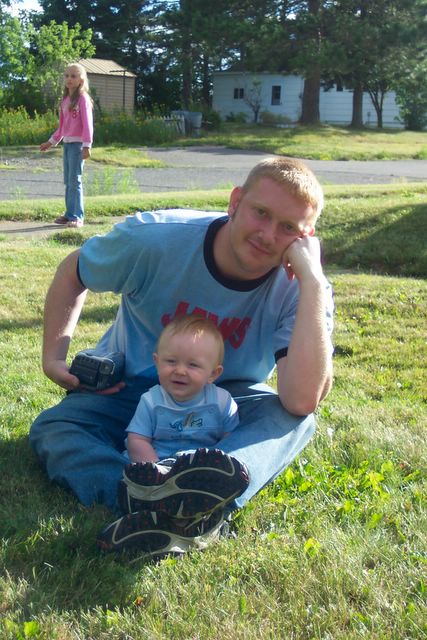
 This is my favorite picture. In this moment, they both seem perfect.
However, I have been taught that biblically, the term perfect refers more to completeness or full maturity than it does to sinlessness (thought that would be part of the the completeness). If that's true, and I believe that it is, is it true that babies are perfect?
We often say that they are. They have not yet soiled themselves with lewd thoughts and hurtful behavior. But if perfection is completeness or full maturity, then babies are about as as imperfect as they come. They have long way to go to get to perfection. This is obvious in the physical, emotional and mental aspect, but they certainly have a long way to go spiritually as well.
If perfection or completeness is defined by the pure and selfless love of Jesus, as I contend it should be, then again babies probably have longest to go. As much as I adore my children and many, many other children, I have to concede that they are selfish. I love my ten month old son with all my heart, but I admit that for the thousands of tears that he has already shed, not one have been for anyone but him. I very much doubt that he has any concept of how his mom or dad feel or what they're going through. Of course, I would never hold that against him. I don't expect anything different. I don't expect the same level of perfection (maturity) from him as I would an adult.
These are some things that have been running through my head that have been altering how I approach spiritual growth. Jesus asks us to be perfect. If it were just about sinlessness, I could point to the cross and declare, "Done!" But it's about full maturity too (which is also a gift of grace by the constant work of the Holy Spirit, but requires me to be in concert with him).
It changes my approach to parenting too. I must be equally concerned with teaching them to love selflessly as I am about enforcing my list of "Thou shalt not's".
And it alters the way I view many other things. For instance, the excuse "I was born this way" loses all steam when we realize we were born as imperfect as possible.
What do you think?
Friday, October 21, 2005
A Happy Anniversary

Yesterday was the fifth anniversary of our wedding. We spent the day celebrating one of the finest blessings the good Lord has ever given. One of my surprises for her included carving this pumpkin. Cindie put together one of our wedding pictures with our vows. It was awesome.
Tuesday, October 11, 2005
Selecting an Audience
 When I read Rick Warren's "Purpose-Driven Church", one of the things that made me squirm was the picture of Saddleback Sam. Warren was talking about how his church had determined to define in detail who their audience was. For them it was a male, young urban professional. They wrapped up everything they knew about this demographic into one symbolic and fictional character they called Saddleback Sam. They even have a picture of this prototypical guy in the book
 (The picture above is not the same picture, though it is close).
This made me very uneasy. I think it stemmed from the misunderstanding that this is the only type of person they were open to or interested in reaching. I've since learned that is not the case, but he is their primary target.
I'm not trying to proof-text, but it does seem that Paul and Barnabas had a primary target. Acts 13:5 When they arrived at Salamis, they proclaimed the word of God in the Jewish synagogues. Often they started with a focus on those who already understood who YHWH was. Perhaps it had to do with some lingering questions about the Gentiles place in all of this. Perhaps the Jews were just typically more receptive... I don't know.
However, the Holy Spirit redirected them and sent them to testify before the Roman Proconsul Sergius Paulus.
I think, then it comes to this: Using worldy marketing methods, such as defining your audience, are not necessarily bad. But we should not hold so devoutly to them when the Spirit leads in other directions. Where there is revelation obey. Where there is no revelation, use wisdom.
Thursday, September 22, 2005
incorrigible
Acts 12:24 But the word of God continued to increase and spread.
 Despite the persecution that drove every Christian except for the Apostles from Jerusalem, despite the arrest and execution of James so of Zebedee, despite Simon Peter's imprisonment, despite the need to go underground, the word of God continued to increase and spread.
We have a heritage and a history of being unstoppable, unflappable, insuppressible, and unrelenting.
Erwin McManus has commented that people ask him, "What is it today that keeps the church from realizing her full potential?"
His response: "Nothing!" Jesus has said that not even the Gates of Hell will be able to overcome it. (Matthew 16:18)
Sure there are trials and tests. But the same things which can serve as friction to slow us down can serve as traction to speed us up.
So, what will slow us? Budget? The lack of resources can make us more dependent on God... Definitely a good thing.
 A corrupt culture? It just gives the lost more that they desire freedom from.
independent isolationistic culture? Just makes people hungrier for community.
Only internal things like fear, doubt and apathy can keep us from seeing our full potential, No external circumstances can stop the body of Christ.
Despite the persecution that drove every Christian except for the Apostles from Jerusalem, despite the arrest and execution of James so of Zebedee, despite Simon Peter's imprisonment, despite the need to go underground, the word of God continued to increase and spread.We have a heritage and a history of being unstoppable, unflappable, insuppressible, and unrelenting.
Erwin McManus has commented that people ask him, "What is it today that keeps the church from realizing her full potential?"
His response: "Nothing!" Jesus has said that not even the Gates of Hell will be able to overcome it. (Matthew 16:18)
Sure there are trials and tests. But the same things which can serve as friction to slow us down can serve as traction to speed us up.
So, what will slow us? Budget? The lack of resources can make us more dependent on God... Definitely a good thing.
 A corrupt culture? It just gives the lost more that they desire freedom from.
independent isolationistic culture? Just makes people hungrier for community.
Only internal things like fear, doubt and apathy can keep us from seeing our full potential, No external circumstances can stop the body of Christ.
Tuesday, September 13, 2005
But the church...
When Herod put James, one of the Apostles, to death with the sword, his approval ratings went through the roof. So, he went out and got Peter.
But the church was earnestly praying to God for him.
He was guarded by four squads of four soldiers. One prisoner guarder by 16 soldiers.
But the church was earnestly praying to God for him.
Peter slept between two soldiers, bound in chains, with guards standing at the entrance.
But the church was earnestly praying to God for him.
Acts 12:5 So Peter was kept in prison, but the church was earnestly praying to God for him.
Peter seemed destined to the same ending as his old fishing buddy.
But the church was earnestly praying to God for him.
That's where the story turns. The events of history turned on that one event. The church earnestly prayed and everything changed. What follows in Acts 12:6-11 is quite possibly the motivation behind the song, "God Will Make a Way". An angel comes. The chains fall off. Gates open. Houdini would be jealous.
Oh, that we could tag this phrase to the end of today's plights.
The sex trade was thriving in Eastern Europe, but the church was earnestly praying to God.
 The world closed their eyes to what was happening in Darfur, but the church was earnestly praying to God.
The destruction wrought by Katrina brought chaos and lawlessness to New Orleans, but the church was earnestly praying to God.
Egypt outlawed evangelism under penalty of death, but the church was earnestly praying to God.
Can you imagine?
But the church was earnestly praying to God for him.
He was guarded by four squads of four soldiers. One prisoner guarder by 16 soldiers.
But the church was earnestly praying to God for him.
Peter slept between two soldiers, bound in chains, with guards standing at the entrance.
But the church was earnestly praying to God for him.
Acts 12:5 So Peter was kept in prison, but the church was earnestly praying to God for him.
Peter seemed destined to the same ending as his old fishing buddy.
But the church was earnestly praying to God for him.
That's where the story turns. The events of history turned on that one event. The church earnestly prayed and everything changed. What follows in Acts 12:6-11 is quite possibly the motivation behind the song, "God Will Make a Way". An angel comes. The chains fall off. Gates open. Houdini would be jealous.
Oh, that we could tag this phrase to the end of today's plights.
The sex trade was thriving in Eastern Europe, but the church was earnestly praying to God.
The world closed their eyes to what was happening in Darfur, but the church was earnestly praying to God.The destruction wrought by Katrina brought chaos and lawlessness to New Orleans, but the church was earnestly praying to God.
Egypt outlawed evangelism under penalty of death, but the church was earnestly praying to God.
Can you imagine?
Thursday, September 08, 2005
The First, But Not The Last
Acts 11:26-30
The disciples were called Christians first at Antioch.
During this time some prophets came down from Jerusalem to Antioch. One of them, named Agabus, stood up and through the Spirit predicted that a severe famine would spread over the entire Roman world. (This happened during the reign of Claudius.) The disciples, each according to his ability, decided to provide help for the brothers living in Judea. This they did, sending their gift to the elders by Barnabas and Saul.
These folks would make Barnabas, Saul and the folks at Antioch proud. I think they'd say, "Yeah, that's what it means to be called Christ-ian." That the Acts church continued.

Here are two links that I feel very comfortable recommending as places through which you can do an Antioch-type thing:
IDES
(more to come)
The disciples were called Christians first at Antioch.
During this time some prophets came down from Jerusalem to Antioch. One of them, named Agabus, stood up and through the Spirit predicted that a severe famine would spread over the entire Roman world. (This happened during the reign of Claudius.) The disciples, each according to his ability, decided to provide help for the brothers living in Judea. This they did, sending their gift to the elders by Barnabas and Saul.
These folks would make Barnabas, Saul and the folks at Antioch proud. I think they'd say, "Yeah, that's what it means to be called Christ-ian." That the Acts church continued.
Here are two links that I feel very comfortable recommending as places through which you can do an Antioch-type thing:
IDES
(more to come)
Tuesday, September 06, 2005
Growing
 When I was a junior one of my friends told me that he had some struggles believing that God makes a difference in people's lives, but observing me had been a real boost in his faith that God still works in people's lives. I do not say this to boast. He was spot on to remind me how incredibly pompous I had been in the past. He was not saying that I had become something special, merely something better than I had been. It was sop encouraging to have someone notice the difference.
A week and a half ago 'Frank' asked me to describe how I had changed over the past five years. I wanted to respond quickly, but have struggled to put my finger on what is different. I could say 'I've grown' or 'I've matured', but these things are too vague to be of any value.
I have noticed recently some changes that are not particularly good. I used to be much more outgoing. The school environment played a big part in that. Now, I don't spend near as much time with people outside my family as I used to. I'm becoming more(even too)introverted.
Other things that I would have hoped five years ago would have changed by now have not. I'm still a walking time-management nightmare.
But what good changes have taken place? I've learned to share... My time, my responsibilities, decision-making. The love of the Christ's church has moved from my mind to my hands and then into my heart. I've gone from naive to cynical to trusting (a track I'll probably continue to make laps on).
I've learned that I need to check my ego at the door every day. I've learned not to lionize or envy other pastors. I've learned to embrace reality over fantasy. It's really much better. I learned to cherish older people.
I say all this to bring glory to Jesus Christ who shapes me guides me , transforms me, and recreates me into something a bit more like himself.
Wednesday, August 31, 2005
Sleeping With the Fishes
Sunday afternoon, Cindie and I were waking Hannah from her afternoon nap when we noticed Dorothy, her fish was lay still on the glass marbles that line the bottom of the fish bowl.
We brought Hannah downstairs while we did a quick brainstorm. What do we do? Swap in a new fish and hope she doesn't know the difference, or introduce her to one of life's most painful truths?
 We chose truth. Cindie told her that Dorothy was dead. We were not sure she would even know what that meant. She said she wanted to see. So we went back upstairs with her. When she saw dead Dorothy, she began to sob. "I don't want Dorothy to be dead."
And at that I began to cry over $1.29 Meijer-purchased Beta that has always brought me more pain than pleasure.
We brought Hannah downstairs while we did a quick brainstorm. What do we do? Swap in a new fish and hope she doesn't know the difference, or introduce her to one of life's most painful truths?
We chose truth. Cindie told her that Dorothy was dead. We were not sure she would even know what that meant. She said she wanted to see. So we went back upstairs with her. When she saw dead Dorothy, she began to sob. "I don't want Dorothy to be dead."And at that I began to cry over $1.29 Meijer-purchased Beta that has always brought me more pain than pleasure.
Subscribe to:
Posts (Atom)